A well-organized parking lot guides drivers and provides a safe layout for vehicles and pedestrians. Without a physical boundary at the end of each space, vehicles can pull too far forward, roll on an incline or move dangerously close to sidewalks, landscaping and storefronts.
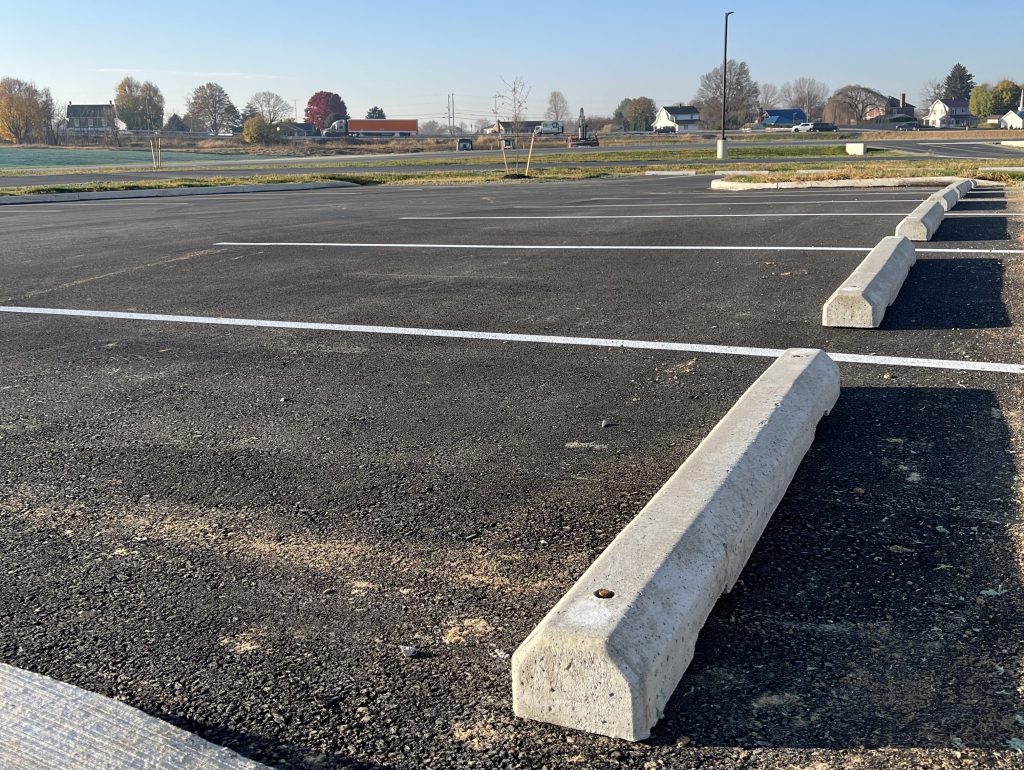
Concrete parking blocks create a physical stop at the front of a space, absorb vehicle contact and separate parked cars from curbing, facades and pedestrian areas.
These blocks vary by manufacturing method. The choice between dry-cast and wet-cast concrete affects density, durability and long-term resistance to impact and weather exposure.
The Value of Concrete Parking Blocks
Concrete wheel stops, parking curbs or parking barriers are precast boundaries installed at the front of parking spaces to keep vehicles in position. They protect people and property in several ways.
- Defined parking spaces: A painted line shows drivers where to park, while a parking block gives each space a solid physical endpoint.
- Property separation: Parking blocks divide vehicles from curbing, landscaping, sidewalks or storefronts.
- Pedestrian safety: A visible barrier between parking spaces and walking areas can make busy commercial lots easier to get around.
The material is an essential factor. A standard 6-foot concrete block weighs 185 pounds, providing the mass and stability needed to remain in place under daily parking lot use. Plastic and rubber options can work for some applications, but they are not as heavy-duty or durable as concrete in the long term.
The Dry-Cast and Wet-Cast Concrete Manufacturing Process
Precasting concrete parking blocks involves forming and curing them before delivery. Dry casting and wet casting are two different ways to approach this. The primary distinction between dry-cast and wet-cast concrete parking blocks is water content, which affects their density, porosity and finished strength.
Dry-Cast Concrete Explained
Dry-cast concrete, sometimes called dry tamp, uses a low-water, zero-slump mix with a stiff texture similar to damp sand. Compacting this blend into the form instead of pouring it lets it hold its shape under pressure. Because the mix does not self-consolidate, dry-cast concrete manufacturing uses vibration to compact the aggregates and reduce air voids.
Since the mix retains its shape, workers can remove the steel form soon after casting and move the block to curing while reusing the form.
Wet-Cast Concrete Explained
Wet-cast concrete, sometimes called wet pour, uses more water, creating a pourable mix that can fill detailed molds and complex shapes. The mix flows into the mold, and the form stays in place until the concrete hardens enough to not lose its shape. More water in the mix can also increase porosity in the finished product.
Wet-cast workability is useful for detailed products, but a denser dry-cast structure is better for parking blocks exposed to vehicle contact, moisture and freeze-thaw conditions.
Dry-Cast vs. Wet-Cast Concrete Parking Block Comparison Chart
| Dry Cast | Wet Cast | |
| Water content | Low (zero-slump mix) | High (measurable slump) |
| Mix consistency | Stiff, like damp sand | Pourable and flowable |
| Form removal | Immediately after casting | After initial hardening |
| Porosity | Lower | Higher |
| Common application | Dense, weather-exposed products | Detailed shapes and architectural products |
Why Nitterhouse Masonry Products Uses Dry-Cast Concrete for Parking Blocks
The difference between dry-cast and wet-cast concrete matters for parking blocks because they are subject to frequent vehicle contact and year-round weather exposure. Nitterhouse Masonry Products uses the dry-cast process to create dense, durable parking blocks designed for long-term use.
1. Unmatched Strength and Durability
We manufacture our dry-cast parking blocks, reinforced with steel, to a minimum compressive strength of 5,500 pounds per square inch and a maximum absorption rate of 6.0%. The dense structure leaves fewer internal voids, allowing the blocks to resist chipping and spalling under repeated contact.
2. Superior Weather Resistance
The dry-cast process creates lower porosity, leaving fewer pathways for water to enter the block. Limiting water absorption reduces internal expansion that can lead to cracking and spalling in freeze-thaw climates.
Water content, vibration and curing all influence the freeze-thaw durability of dry-cast concrete. Our low-porosity parking blocks handle sun, snow and deicing salt exposure over time.
3. Long-Term Performance
A block that holds its shape and resists cracking can perform reliably through years of vehicle contact, weather exposure and regular parking lot use. Dry-cast production also allows manufacturers to strip and reuse steel forms sooner than wet-cast production.
4. Eco-Friendly Manufacturing
The dry-cast process uses a low-water mix compacted by vibration, creating the dense structure that makes these blocks durable. Our concrete products can contribute to LEED certification on qualifying projects, and precision batching supports consistent precast manufacturing.
Before choosing concrete parking blocks, ask the manufacturer which casting method they use. If a product listing does not identify the casting method, confirm whether the block is dry-cast or wet-cast — as you now know, the manufacturing process can affect porosity, density and long-term performance.
Wet-cast concrete works well for detailed architectural shapes, while parking blocks demand the density and durability that dry-cast production provides.
Nitterhouse Masonry Products’ Commitment to Quality
Nitterhouse Masonry began as Nitterhouse Concrete Products in 1923. More than 100 years and five generations later, our manufacturing process still uses precision batching, electronic material measurement and vibration-controlled compaction.
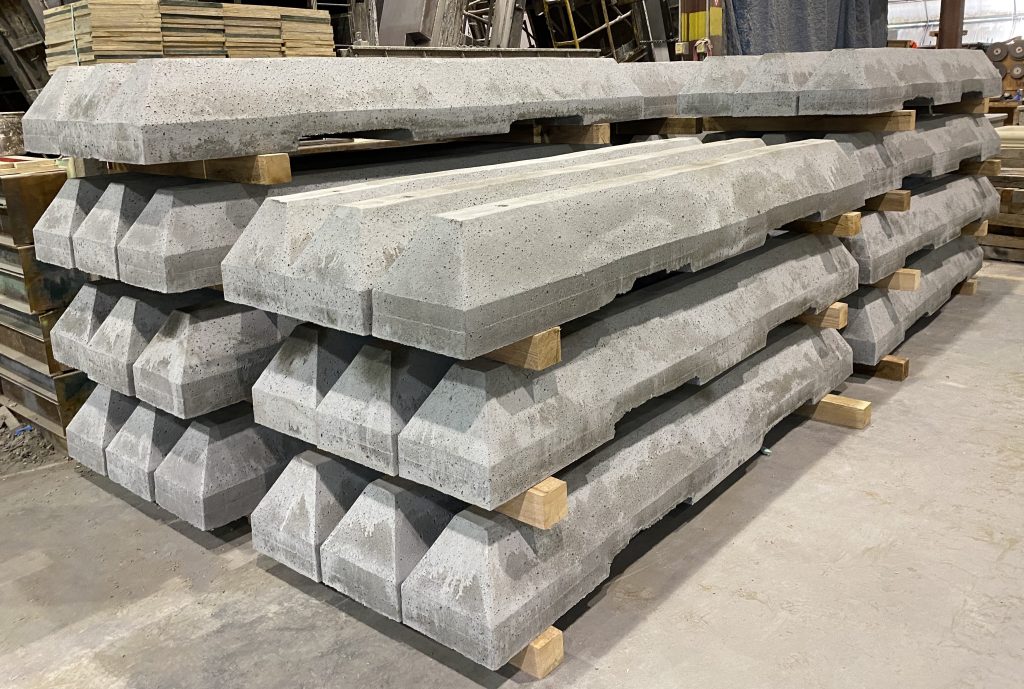
We reinforce every standard and yellow parking block with #5 steel rebar. The reinforcement works with 5,500 pounds-per-square-inch dry-cast concrete to handle vehicle contact and the tensile stress that can cause unreinforced concrete to split.
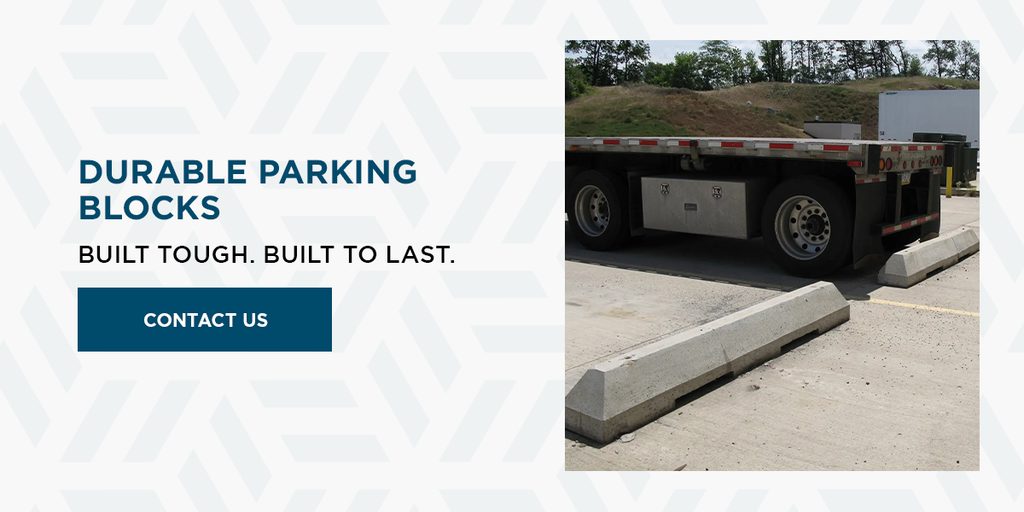
Blocks come in 6-foot, 7-foot and 8-foot lengths in standard gray, safety yellow and a log-style finish suited for parks, campgrounds and trail lots. We also offer truck (tractor trailer) parking blocks that come in 8-foot and 10-foot lengths.
Our parking blocks are not customizable. Made-to-order yellow blocks typically have a lead time of about four weeks. Log-style parking blocks are hand-cast with reinforced 3,500 pounds-per-square-inch concrete.
Choose Nitterhouse Masonry Products for Durable Parking Blocks
Dry-cast concrete uses a low-water mix compacted through vibration, creating a denser, lower-porosity parking block suited for vehicle contact and weather exposure.
Nitterhouse Masonry Products’ parking blocks meet ASTM standards and can contribute to LEED certification on qualifying projects. We work with project teams to match each application with the appropriate parking block and deliver your order to your project site.
Contact us for a quote on concrete parking stop blocks, or find a dealer near you.